As I have retired from the Waimakariri mayoralty, I will no longer be attending this site. Thanks for visiting over the years.
I can still be found on Facebook.
As I have retired from the Waimakariri mayoralty, I will no longer be attending this site. Thanks for visiting over the years.
I can still be found on Facebook.
I have decided that this will be on my last term on the Waimakariri District Council.
The term ends in October 2019 and by then I will have been Mayor for nine years and a member of the Council or its predecessors for 30. I started as a Rangiora Borough Councillor in 1983. Three years later the Borough amalgamated with the surrounding District to form an enlarged Rangiora District Council. The Waimakariri District Council came into being in 1989 and included the former Rangiora District (by them amalgamated with Eyre County), Kaiapoi Borough, Oxford County and the southern part of Hurunui County.
In 1995 I was appointed Deputy Mayor alongside Mayor Janice Skurr. In 2001, I stood down under pressure of work – it had become too much along with my job as Assistant Principal at Rangiora High School. For the next six years I chaired the Rangiora Ward Advisory Board, an appointed predecessor of today’s Rangiora Ashley Community Board.
I was re-elected to the Council in 2007 and won the Mayoralty in the local government elections of 2010, just one month after the 4 September 2010 earthquake.
Today’s media statement follows.
Media Statement from David Ayers, Mayor of Waimakariri
David Ayers Announces Intention to Retire from Waimakariri Mayoralty
The Mayor of Waimakariri, David Ayers, has announced his intention to retire at the end of the current Council term in October 2019.
“Marilyn and I are at a stage in our lives, in our early 70s, where we want to step back rather than to commit a further three years to this role,” he said. “I am looking forward to the next 18 months of Council work but it will then be time for someone else to take on the responsibilities.”
David Ayers was first elected to the Rangiora Borough Council in 1983 and is the only Rangiora Borough Councillor to have served on the Waimakariri District Council. By October next year, he will have spent 30 years as a councillor or mayor – plus six years in the early 2000s chairing the Council’s Rangiora Ward Advisory Board. He was Deputy Mayor between 1995 and 2001 and was elected to the Mayoralty in 2010.
“Coming to the mayoralty one month after the September 2010 earthquake has meant that my time has been dominated by earthquake recovery, earthquake-prone buildings and town centre rebuilding,” he said. “However, the time to look back will be some time in the future. There is plenty ahead of us on the Council over the rest of the term, including the on-going post-earthquake projects in the Kaiapoi and Pines-Kairaki Regeneration Areas.
“I continue to enjoy the role and being out in our fantastic community, but announcing my intentions now gives others plenty of time to consider standing. It is not a job to be taken on lightly as it requires a good 60 hours a week, including most weekends.”
David Ayers
Mobile: 027 648 5677
Home: 03 313 6262
Council: 03 311 8900
Once again the Oxford Show was a Waimakariri magnet. Big crowds turned up along with the McAlpines North Canterbury Pipe Band (pictured).

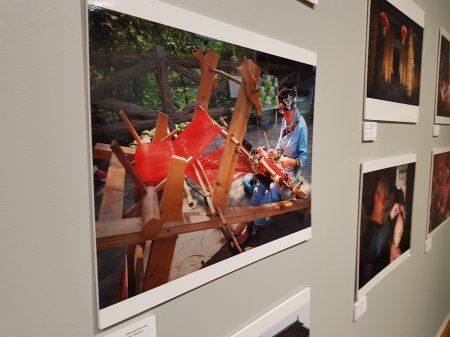
The Chamber Gallery in the #Rangiora library is now showcasing the work of photographers from Waimakariri’s sister prefecture, Enshi in Hubei Province.
These stunning photos are an example of how sister city relationships can enhance cultural exchanges between New Zealand and China.

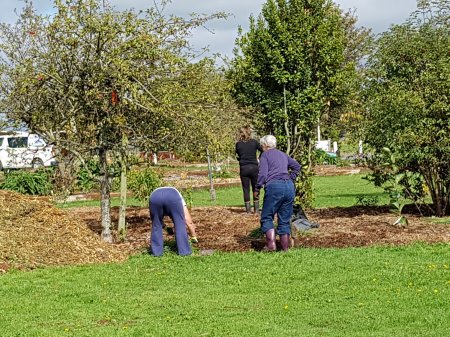
Volunteers helping out at the Kaiapoi Food Forest. Pre-existing and transplanted fruit trees and new plantings of berry bushes and natives have transformed this corner of our Regeneration Areas that was formerly known as one of the Kaiapoi Red Zones.
Do you want to know what is happening? Try going to https://www.waimakariri.govt.nz/services/emergencies-and-recovery/regeneration/related-information/regeneration-videos
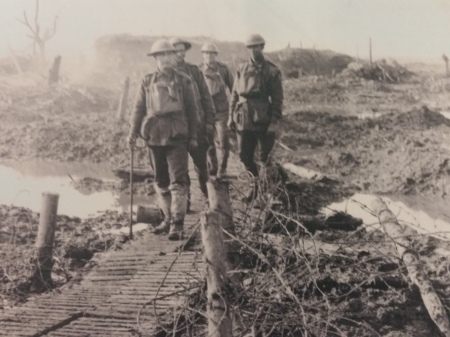
The Belgians Have Not Forgotten, an exhibition that reminds us of the huge sacrifices that our country made in the Battle of Passchendaele in October 1917 is on display in the Council Chamber in Rangiora. We have been fortunate to get it near the end of a tour of Australia and New Zealand, between its Christchurch and Dunedin appointments.
This, of course, is the battle’s centenary year. The Passchendaele battlefield is within the Municipality of Zonnebeke, which has a twinning relationship with Waimakariri.
All are welcome. It is open during office hours.
Big crowd tonight enjoyed food stalls, fire dancing and this afternoon’s ice sculptures.

Check out @AyersDavidL’s Tweet: https://twitter.com/AyersDavidL/status/886085310924242944?s=09
Check this link out:

Today was the annual Classic American car show at Gladstone Park, Pegasus. There were lots of Mustangs, Corvettes, Impalas and the like, but this 1934 Ford V8 pickup really appealed to us.

Kaiapoi North School staged a fundraiser today in the form of a car boot sale. As you can see, there were things for the kids too!

Thank you to all who have sent messages via different media. If you had asked me six years ago, newly elected to this position and one month after the September quake if I would have survived into a third term, I would have expressed my doubts. However, a unified Council and community have returned much the same council for three terms in a row and for this we are grateful for your support.
The next three years will be dominated by the recovery of the regeneration areas in Kaiapoi and Pines-Kairaki, by a variety of water issues and by planning for current and anticipated growth. Fortunately we have a Council that has one of the soundest financial footings in the country.
Thank you for your support and we look forward to working together as a Waimakariri District to meet our challenges.
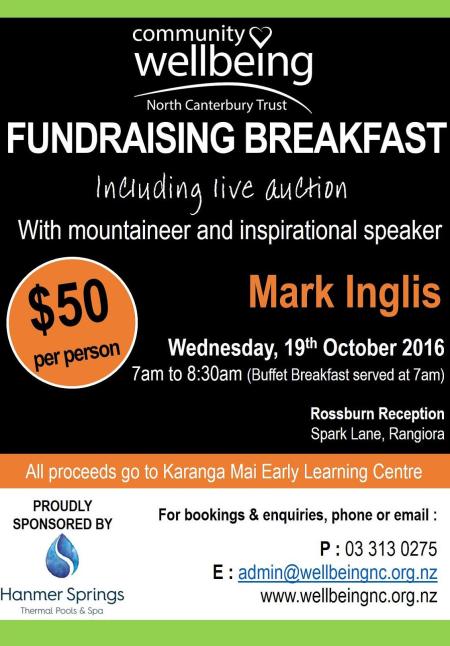

This event is happening in Kaiapoi and Oxford next week. Lesley Elliott tells the story of her daughter Sophie’s relationship with Clayton Weatherston and the signs of abuse that friends and family did not recognise. Lesley has travelled all over New Zealand speaking to raise awareness of the signs of abuse in hope to avoid another tragic death like Sophie’s.
Classic cars have poured into #Oxford for Spring into Oxford – all ages, all makes. The town is buzzing with markets too!


The amazing variety of daffodils that are out there were on full display at this year’s #Woodend Flower Show. A big crowd turned out for the premier flower show in #Waimakariri.
This comes form the NZ Herald and is about Auckland, but it actually applies to the whole country.
http://www.nzherald.co.nz/transport/news/article.cfm?c_id=97&objectid=11719192
On all afternoon and into the evening using the new removable extension to the stage.

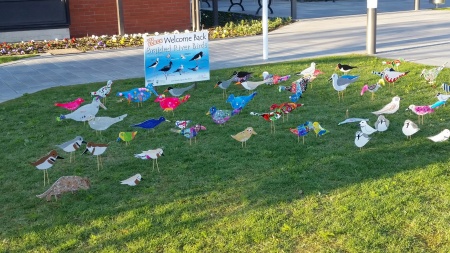 This is the time of the year when endangered birds like the wrybill, black-fronted tern and black-billed gulls return to the Ashley-Rakahuri to breed. Local primary schoolchildren have made their own birds – currently they are on the front lawn of the Council building in Rangiora, but expect the flock to land elsewhere in the district in the coming weeks!
Breeding areas are usually marked, so keep well away, and don’t let dogs off the leash. The wrybill nests are isolated almost impossible to see, but the terns and gulls nest in colonies.
 David Ayers' Weblog